
Reading an Emmy nominations list as if it were one televised show gives you the wrong picture, because most Emmys are handed out before the broadcast. For 2026 the Television Academy listed 121 awards across three ceremonies, and in most categories the nominees were chosen by members of the matching peer group: actors for acting, writers for writing, sound editors for sound editing.
Emmy nomination categories are the awards the Television Academy hands out for prime-time and streaming television, and nominees are chosen in a members-only vote. Under the 2025-26 rules, programs that first aired between June 1, 2025 and May 31, 2026 could enter; each peer group voted in its own categories from June 11 to June 22, 2026; the number of nominees in a category was set by how many entries it received; and a second, final round from August 17 to August 26 picked the winners. The Daytime, Sports and News & Documentary Emmys are separate competitions run by another academy.
This page compiles the official rules into tables you can use while reading a nominations list. It covers the 78th Emmy Awards (2026) and compares them with the 99th Oscars rules published in May 2026; the rest of our awards-season explainers build on the same rules.
Key points:
- “The Emmys” usually means the Television Academy’s prime-time competition; NATAS runs Daytime, Children’s & Family, News & Documentary, Sports and Technology & Engineering.
- Only 19 of the 121 awards on the Academy’s 2026 by-night list were scheduled for the NBC telecast; the other 102 were set for September 5 and 6.
- Peer groups nominate in their own crafts, but all voting members can vote on the main program categories.
- Most categories with 20 or more entries get five to eight nominees; smaller fields get fewer.
- The Oscars use branch voting too, but cap nominees at five (ten for Best Picture) and open every final category to all active and life members who have seen its nominees.
Which Emmys are we talking about?
This page is about the Television Academy’s prime-time awards, the ones announced in July and presented in September. That is one of several competitions that share the Emmy name and statuette. The Television Academy’s FAQ says it is based in Los Angeles and honors prime-time programming, while the National Academy of Television Arts & Sciences (NATAS), based in New York, administers daytime, news and sports Emmys. The statuette is owned jointly by the two academies.
| Competition | Run by | What it covers | Where results are published |
|---|---|---|---|
| Emmy Awards (often called the Primetime Emmys) | Television Academy, Los Angeles | Prime-time-genre programs on national broadcast, cable or streaming | televisionacademy.com |
| Daytime Emmys | NATAS, New York | Daytime programming | theemmys.tv |
| Children’s & Family Emmys | NATAS | Children’s and family programming | theemmys.tv |
| News & Documentary Emmys | NATAS | News and documentary | theemmys.tv |
| Sports Emmys | NATAS | Sports coverage | theemmys.tv |
| Technology & Engineering Emmys | NATAS | Technical achievement | theemmys.tv |
| Regional Emmys | 19 NATAS chapters | Local and regional television | Chapter sites |
| International Emmys | International Academy of Television Arts & Sciences | Television produced outside the U.S. | iemmys.tv |
Sources: Television Academy FAQ and NATAS About page, both read October 7, 2026.
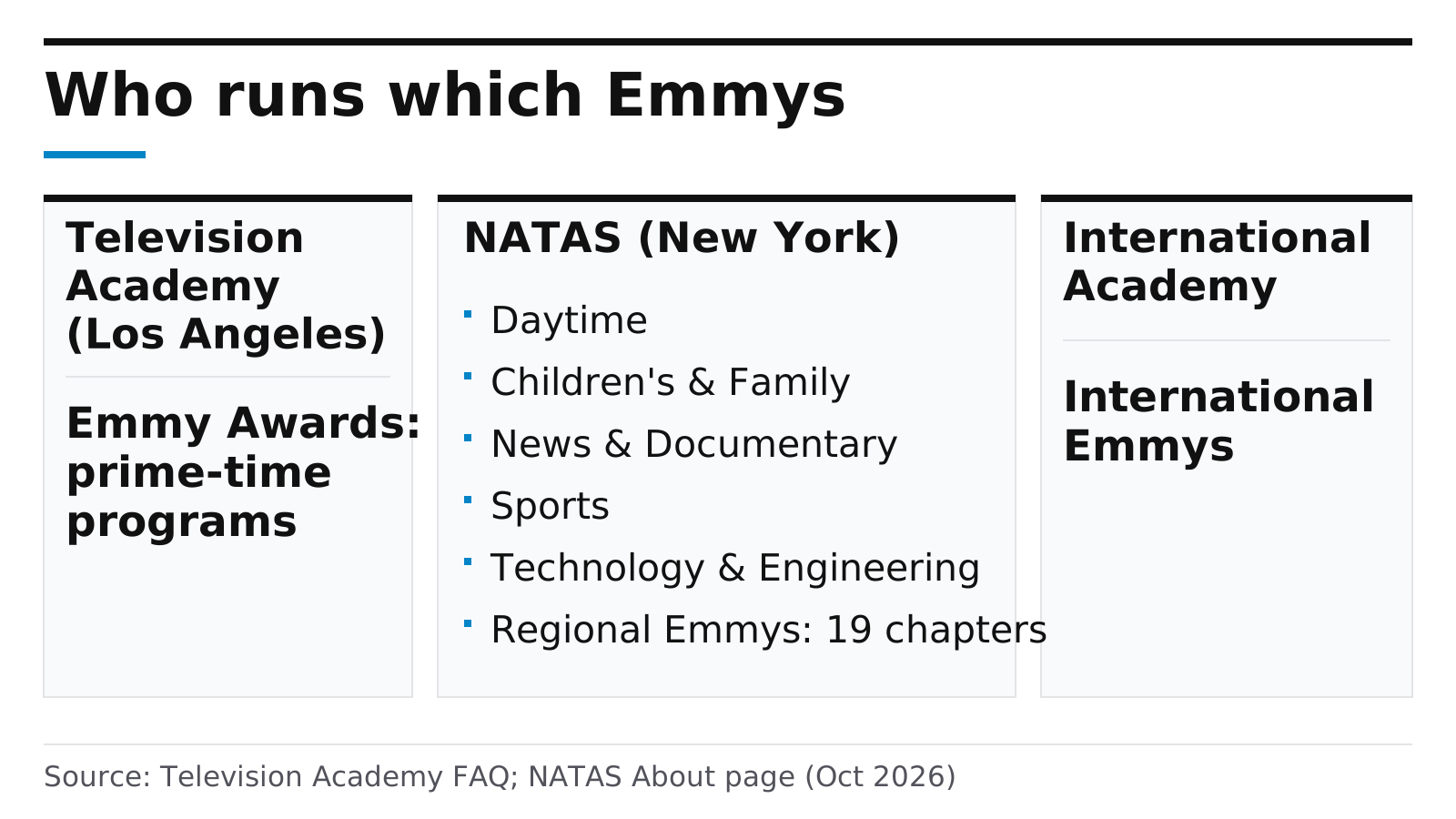
The rules keep the competitions apart. A program entering the Television Academy’s 2026 competition could not also have been submitted to Daytime, Children’s & Family, News & Documentary, Sports or International, and a program that entered one competition needs Industry Panel approval to move to another in a later year. That is also why a show that is popular in the U.S. can be missing entirely: under the 2025-26 rules, a production made outside the U.S. without a qualifying U.S. co-production partner cannot enter. Such shows have to look to other competitions, such as the International Emmys, which set their own entry rules.
Takeaway: Before reading any list, check which academy published it; Daytime and Sports nominees will never appear on the Television Academy’s list.
How are Primetime Emmy categories grouped?
The Television Academy groups its awards by craft, and each craft maps to a peer group of members who work in it. The 2025-26 rules book lays the awards out in craft sections, from Animation and Art Direction through Sound Mixing, Stunts and Writing. By our count of the numbered headings, it defines 118 awards: 86 categories, 27 areas and 5 juried awards (the difference between those three types is explained further down this page). That count comes from the April rules book; the 121 in the next section counts the entries on the July by-night lists. They are different documents, so do not subtract one from the other to find new awards.
For a viewer, five groups cover almost everything you will see on a nominations list. The voter column is a general guide; the rules’ Appendix II lists every extra ballot.
| Group | Examples from the 2026 list | Who votes in the nomination round |
|---|---|---|
| Programs | Drama Series, Comedy Series, Limited or Anthology Series, Variety Series, Reality Competition Program | All National Active members (animated and documentary/nonfiction programs excepted) |
| Performers | Lead, supporting and guest actor and actress; host; narrator; character voice-over | Performers peer group; Casting Directors also receive performer ballots, and hosts, narrators and voice-over have further groups listed in Appendix II |
| Directing and writing | Directing for a Drama Series; Writing for a Comedy Series | Directors and Writers peer groups |
| Craft areas | Casting, cinematography, costumes, editing, makeup, hairstyling, music, production design, sound, visual effects, stunts, title design | The matching craft peer group |
| Nonfiction, reality and emerging media | Documentary or Nonfiction Series, Structured Reality Program, Game Show, Emerging Media Program | Documentary programs: Documentary peer group; reality and game-show programs: all National Active members; emerging media: Emerging Media peer group |
Source: 78th Emmy Awards Rules and Procedures, Version 4, Appendix II and Nomination Voting Procedures.
Genre also shapes the list. The rules split most program and craft awards by format: comedy, drama, limited or anthology series or movie, variety, reality and nonfiction. Where an award covers several kinds of program, the rules call each kind a track. Outstanding Variety Series, for example, is judged in two genres, talk and scripted variety, with nominations shared in proportion to the entries in each.
Takeaway: Read a category name as craft plus format, such as “Picture Editing” plus “Single-Camera Comedy Series,” then check Appendix II of the rules for every peer group that votes on it.
What changed for the 2026 Emmys?
The 2026 change this section covers is where the awards were presented, not how they were voted. On July 17, 2026 the Television Academy announced that, “given the extraordinary breadth of work recognized each year and the limited time available within a three-hour broadcast,” five categories would move off the NBC telecast to the ceremonies held the week before.
The five categories that moved were Writing for a Variety Series, Supporting Actor in a Limited Series or Movie, Supporting Actress in a Limited Series or Movie, Directing for a Limited Series or Movie, and Writing for a Limited Series or Movie. The Academy’s July 17, 2026 press release then listed every award by night:
| Ceremony (2026) | Awards listed | Examples |
|---|---|---|
| Saturday, September 5 | 49 | Game Show, Structured Reality Program, Documentary or Nonfiction Series, Variety Special (Live), Writing for a Variety Series |
| Sunday, September 6 | 53 | Guest acting, casting, cinematography, costumes, editing, music, sound, visual effects, stunts, the limited-series supporting and directing awards |
| Monday, September 14, NBC telecast | 19 | Drama, Comedy, Limited or Anthology and Variety Series; Reality Competition Program; lead acting; comedy and drama supporting acting, directing and writing |
Source: Television Academy press release, July 17, 2026. The total of 121 is our sum of the three lists.
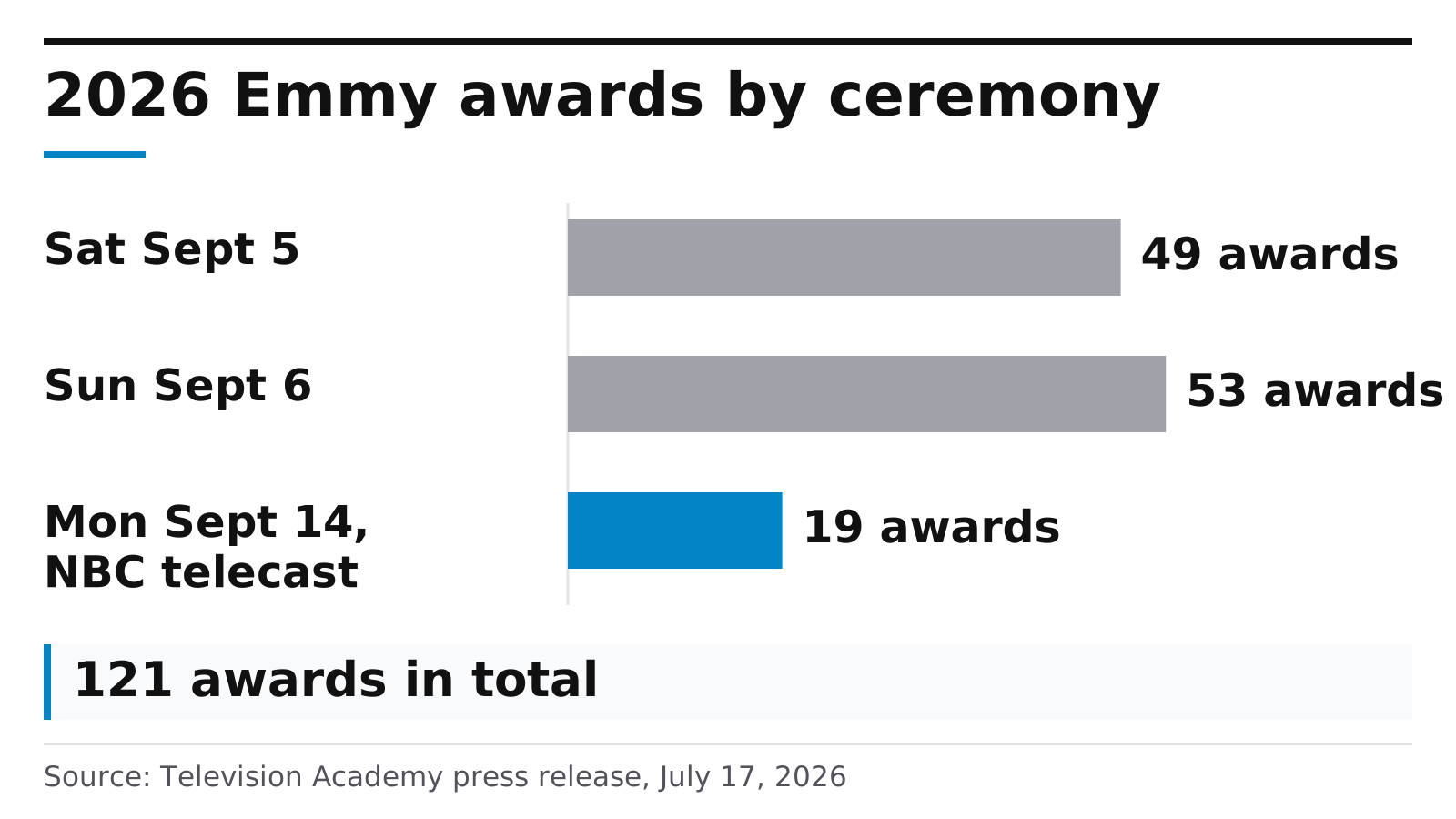
The rules book printed in April still called the September 5 and 6 events the “Creative Arts Awards and Governors Gala,” while the July announcement simply calls them “additional Emmy Awards ceremonies.” Either way, they are part of the same competition, decided by the same voting rounds as the televised awards. The rule change affected what you saw on television; it did not change who could vote.
Takeaway: An award missing from the broadcast was still voted on and scheduled for an earlier ceremony; check the September 5 and 6 lists before assuming a category was dropped.
How are Emmy nominees chosen? The five-stage path
Emmy nominees come out of a fixed sequence in the rules: entry, a nomination vote by peer group, a nominee count set by the number of entries, a final-round vote, and a count by accountants. Each stage has its own dates and its own voters, which is why a show can be eligible and still not be nominated.
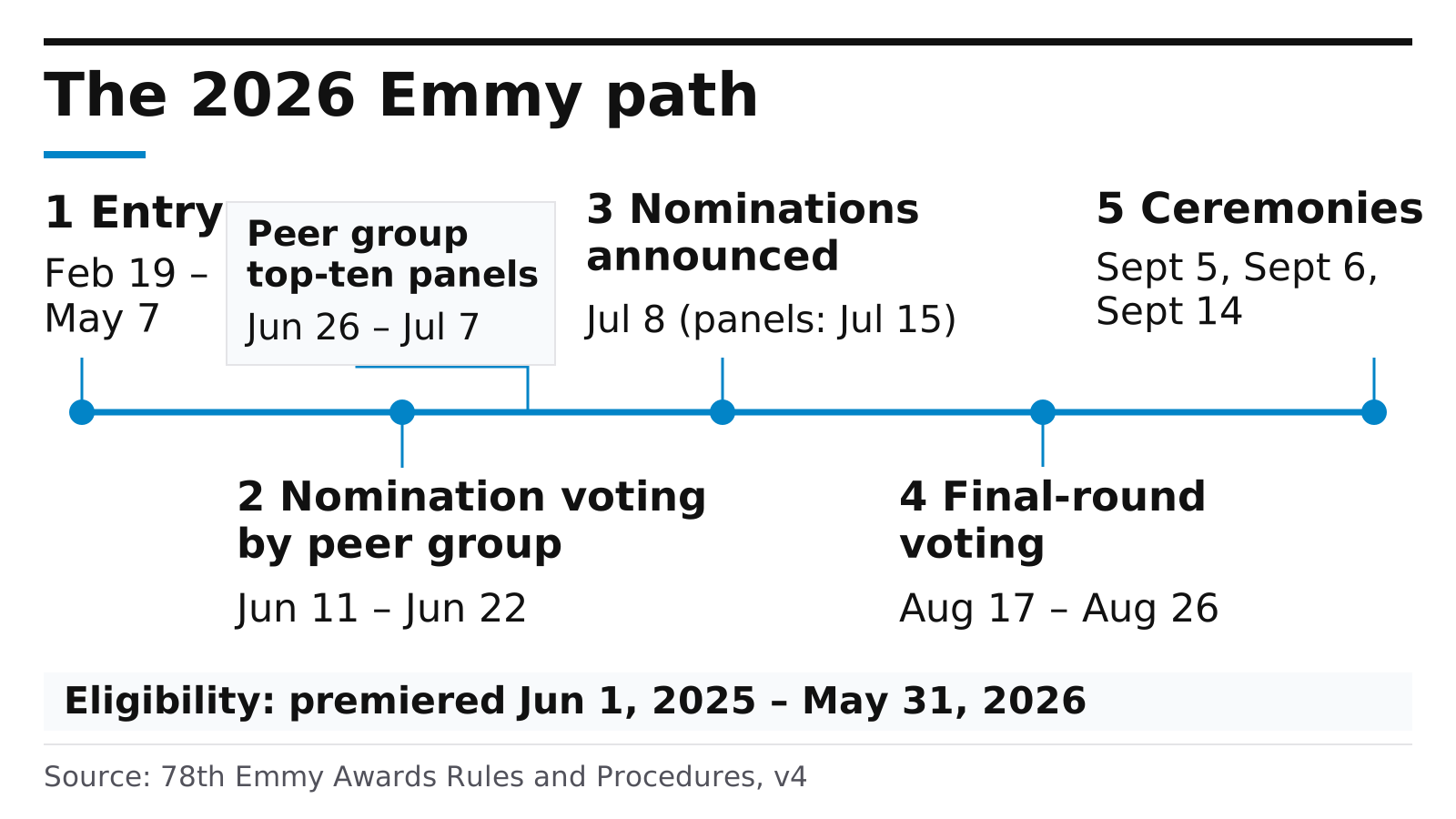
| Stage | What happens | 2026 dates | Who acts |
|---|---|---|---|
| 1. Entry | Studios, networks and producers submit programs and individual achievements that premiered June 1, 2025 to May 31, 2026 | February 19 to May 7 | Entrants (not the Academy) |
| 2. Nomination round | Members vote on the categories open to their peer group | June 11 to June 22, 10 p.m. PT | National Active members by peer group; all of them on most program categories (animated and documentary programs excepted) |
| 3. Nominee count | The number of nominations per category is fixed by the number of entries, with tie rules | Applied before the July 8 announcement; some peer groups run a top-ten panel round June 26 to July 7, announced July 15 | Rules and the Awards Committee |
| 4. Final round | Members choose winners from the nominees | August 17 to August 26 | Same eligible voters; nominees cannot vote in their own category |
| 5. Count and presentation | Accountants tabulate the votes; winners are announced at the ceremonies | September 5, 6 and 14 | Accountants; Television Academy |
Source: 78th Emmy Awards Rules and Procedures, Version 4, calendar and voting sections.
Three rules in the middle stages explain most surprises. First, only National Active members vote; Associate, Los Angeles Area, Faculty and Student members do not, according to the Academy’s FAQ, which describes more than 28,000 members in 31 peer groups. Second, members who also hold credits in another craft can apply for a “hyphenate” ballot, so a producer with qualifying writing credits can also vote on writing. Third, the final round is not always a single pick: each peer group chooses its own judging system, either a yes/no vote on whether each nominee deserves an Emmy or a single vote for the top choice.
If you are tracking a show’s chances, the entry window matters as much as the vote. A series that premieres in September is judged at the following summer’s Emmys, which is one reason the Emmy calendar runs against how the network fall TV schedule is set.
Common mistake: Treating the nominations list as a ranking of every eligible show. Programs have to be entered by their producers or networks before May 7, and a show that was never entered cannot be nominated.
Takeaway: To understand a surprising snub, check the entry window and the voting peer group before blaming the final vote.
How many nominees does each Emmy category get?
The number of nominees in an Emmy category is not fixed. Under the 2025-26 rules it is set by how many entries the category received, with exceptions for the two flagship series awards and for small categories.
| Entries received | Nominations |
|---|---|
| 0 to 7 | Screened by the peer group; each entry with 70% approval is nominated, up to two |
| 8 to 19 | Entries divided by 4, rounded to the nearest whole number |
| 20 to 80 | 5 |
| 81 to 160 | 6 |
| 161 to 240 | 7 |
| More than 240 | 8 |
| Comedy Series and Drama Series | Always 8 |
Source: 78th Emmy Awards Rules and Procedures, Version 4, Nomination Procedures, rule 1.
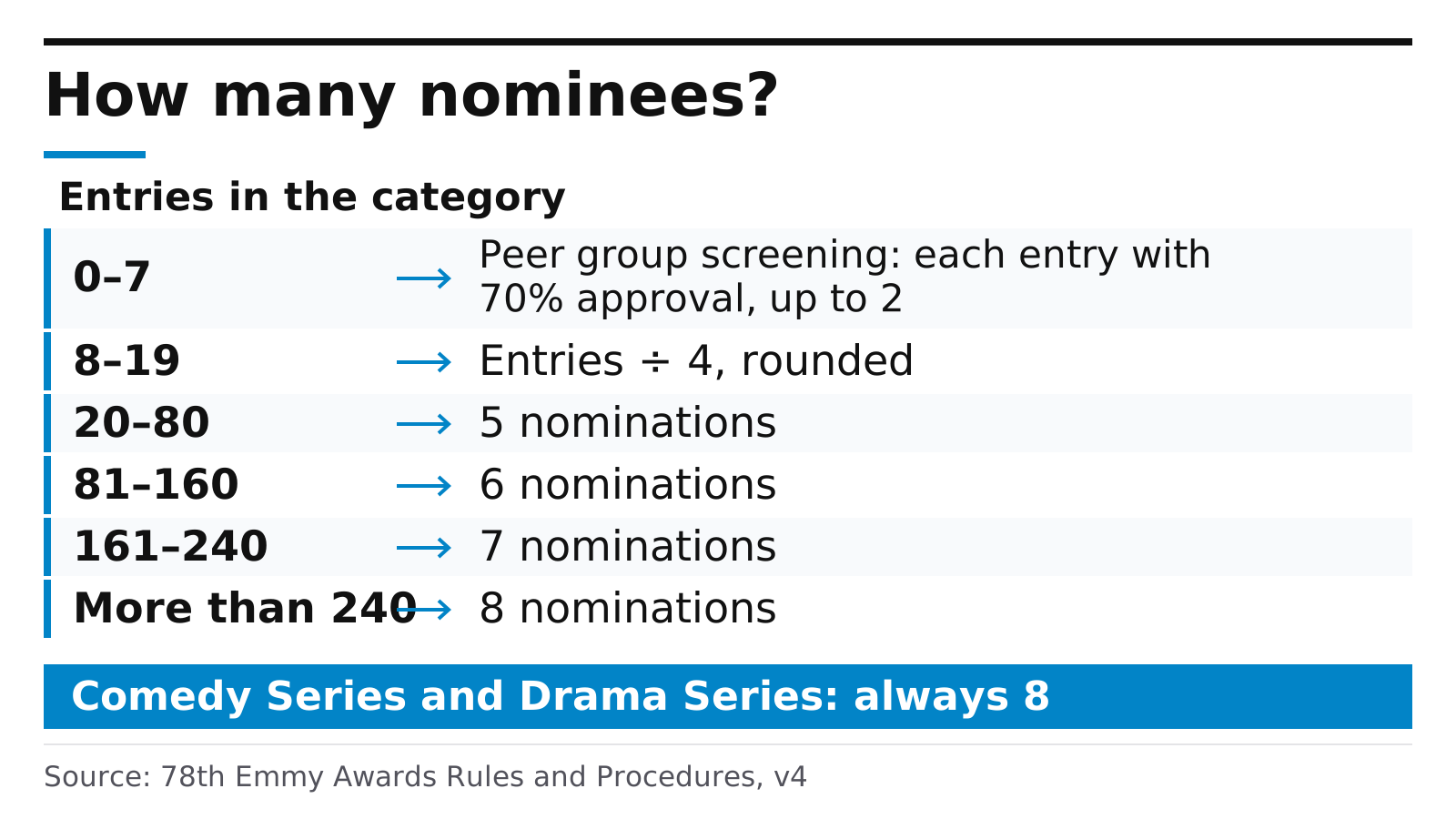
Ties change the count at the edges. If a tie would leave a category one away from its target, the higher number wins (a choice between 4 and 6 goes to 6); if it would leave it two away, the lower number wins (3 or 7 becomes 3); a three-away tie goes to the Awards Committee, as does any result below three or above seven nominations. Actor and actress categories for the same genre, such as supporting actor and supporting actress in a comedy, get the same number of nominations unless one has fewer than 20 entries.
Tracks add one more rule. A track qualifies for a share of nominations only if it holds at least 5% of a category’s entries and at least three entries, and a track that receives no votes still produces no nominee. When every track in a category reaches 20 or more entries, the category is split into separate awards for that year.
Takeaway: Treat the nominee count as a rough signal of how crowded a field was, not proof; ties and the actor-actress parity rule can move it.
Category, area or juried: three ways an Emmy is decided
Not every Emmy is a head-to-head race. The rules define three kinds of award, and the kind decides whether a category produces exactly one winner, several winners or none.
| Award type | How the winner is decided | Possible winners | 2025-26 count in the rules book |
|---|---|---|---|
| Category | Head-to-head; the highest vote-getter wins | Exactly one | 86 |
| Area | Each nominee judged on its own; any nominee with at least 90% approval wins; if none reaches 90%, the highest approval wins | One or more (picture editing and sound mixing areas also need 50% approval, so none is possible) | 27 |
| Juried | A jury of peer group members screens all entries, usually with no nominations; only unanimous approval wins, though the chair can overrule a small number of dissenters on larger juries | One, several or none, announced before the ceremony | 5 |
Source: 78th Emmy Awards Rules and Procedures, Version 4, Awards Definitions. Counts are ours, from the numbered award headings in the same document.
Final-round ties in a category are broken by going back to the nomination round: the tied nominee that received more first-round votes wins. That detail is one reason the first round matters beyond simply getting on the ballot.
Takeaway: When an Emmy list shows two winners for one award, or a juried award with no nominees, check whether it is an area or juried award before assuming an error.
Emmys vs Oscars: how the two voting systems differ
The Emmys and the Oscars both let professionals vote on their own crafts, but the Oscars cap nominations at five (ten for Best Picture) and open every final category to all active and life members who have seen its nominees. The Emmys set nominee counts by entries and keep many final votes inside peer groups.
| Point of comparison | Emmy Awards (78th, 2026) | Academy Awards (99th rules, published May 2026) |
|---|---|---|
| Organizer | Television Academy | Academy of Motion Picture Arts and Sciences |
| What is honored | Prime-time-genre television on national broadcast, cable or streaming | Theatrically released feature films, plus short films |
| Eligibility window | Premiered June 1, 2025 to May 31, 2026 | Theatrical qualifying run beginning January 1 to December 31, 2026 |
| Who can vote | National Active members | Active and life members |
| Who nominates | Peer group for craft and performer awards; all National Active members for program awards (animated and documentary excepted) | The matching branch for many awards, such as actors for acting and directors for directing; some categories use cross-branch or all-member procedures; all active and life members for Best Picture |
| Nominees per category | Set by entry count: up to two for 0 to 7 entries, entries divided by 4 for 8 to 19, then 5 to 8; Comedy and Drama Series always 8 | Not more than five; Best Picture ten |
| Who decides winners | Program categories (animated and documentary excepted): all eligible members; individual achievements: peer judging | Active and life members, in every category, provided they have seen all its nominees |
| Viewing requirement | Nominated comedy, drama and short-form series submit six episodes for final-round judging | Members must view all nominated films in a category to vote in it |
| Counting method | Highest vote or approval threshold, by award type | Nominations: preferential or reweighted range voting; final ballots: plurality or preferential |
Sources: 78th Emmy Awards Rules and Procedures, Version 4; 99th Academy Awards Complete Rules, Rules One, Three, Five, Six, Twelve and Twenty.
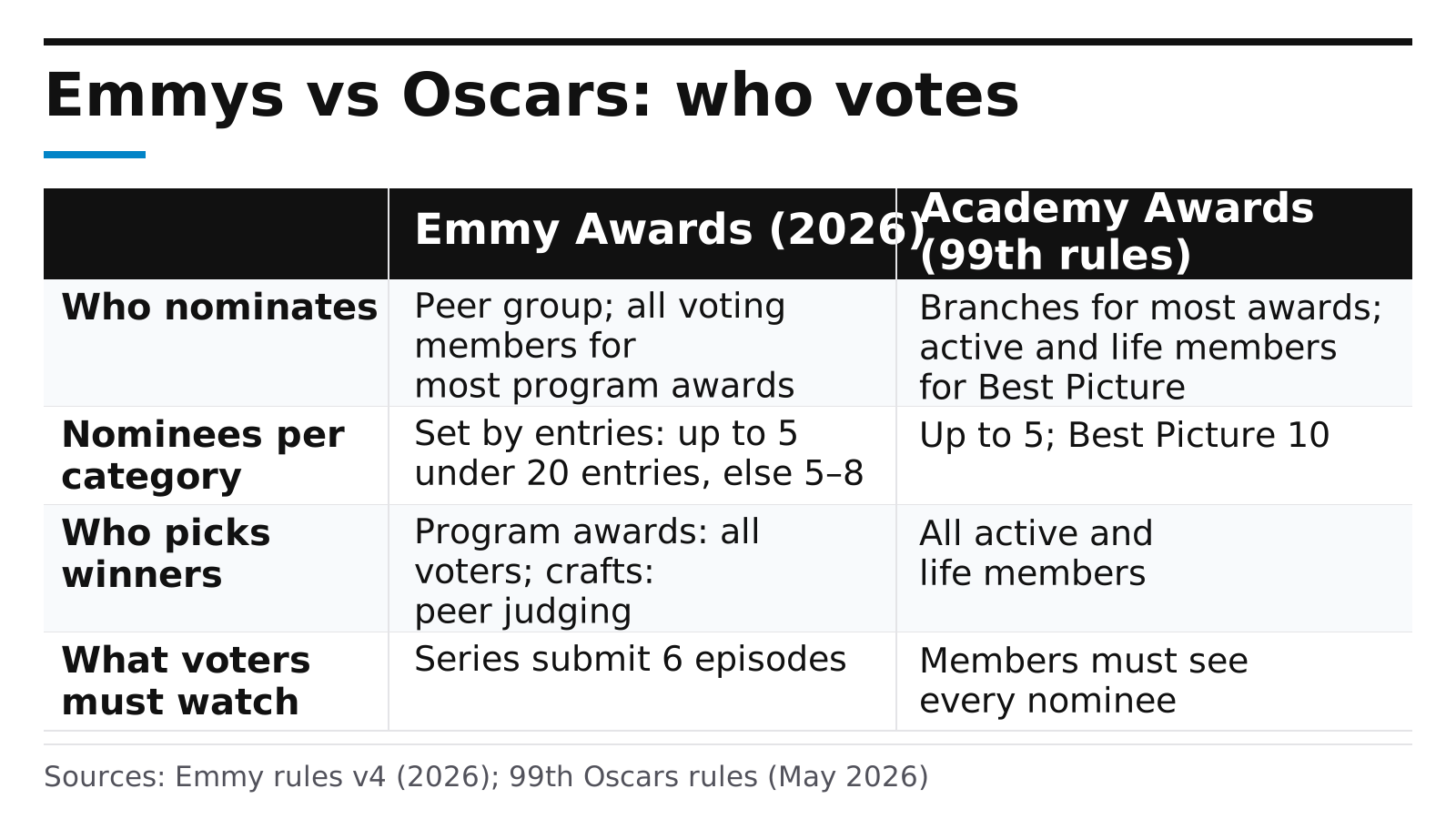
The Best Picture count is the clearest structural difference. All active and life Academy members rank up to ten films to produce the ten nominees, and RTÉ, explaining the voting for the March 2026 ceremony, described the final Best Picture count as a ranked ballot in which the film with the fewest first-place votes is eliminated until one film has a majority. Most other Oscar categories go to the nominee with the most votes. If you are building picks, that difference is why precursor awards are read differently for Best Picture than for the acting races.
The viewing rule also cuts differently. The 99th Oscars rules require members to have seen every nominated film in a category before voting in it; the Emmy rules put the obligation on the program, which must deliver episodes for judging. For the full set of Oscar categories in ceremony-ready form, use the blank Oscar pool ballot with scoring rules.
Takeaway: Do not carry Emmy logic into an Oscar pool; Oscar finals are open to every eligible member who has seen the nominees, not only the craft that nominated.
Common misreadings of an Emmy nominations list
Most confusion about Emmy nominations comes from four habits: treating the telecast as the full list, mixing competitions, assuming a fixed number of nominees, and assuming every award has one winner. Each has a quick check.
| Misreading | What the rules say | Quick check |
|---|---|---|
| “That category was cut.” | Five categories moved to the September 6 or September 5 ceremonies in 2026; they were still presented | Search the by-night press release |
| “The show was snubbed by the Emmys.” | Unentered programs cannot be nominated; foreign productions without a qualifying U.S. co-producer are ineligible | Check the entry window and the co-production rule |
| “Every category has five nominees.” | Counts run from up to two to eight, set by entries | Count the nominees and compare with the entry table |
| “Two winners means a tie or a mistake.” | Area and juried awards can have several winners | Check the award type in the rules book |
| “Daytime nominees are missing.” | NATAS runs the Daytime Emmys separately | Look at theemmys.tv |
Common mistake: Comparing nominations totals across years without checking the rules. Category splits, mergers and track rules change from year to year, so a network’s total can rise or fall without any change in the shows themselves.
If you are filling in a ballot for a watch party, the same discipline applies to the Oscars: start from the official category list rather than from a news story’s highlights.
Takeaway: Before arguing about a result, confirm the competition, the ceremony night and the award type.
When this does not apply
This page describes the Television Academy’s 78th Emmy Awards rules (Version 4, updated April 7, 2026) and the Oscars rules for the 99th Academy Awards. It does not apply to the NATAS competitions (Daytime, Children’s & Family, News & Documentary, Sports, Technology & Engineering, Regional) or to the International Emmys, which publish their own rules.
The Television Academy reviews its rules every year, and the Board of Governors can change categories, nominee counts and dates. For the 79th Emmys, read the new rules book before applying any number on this page; every explainer on our article index carries its own update date for the same reason. This site is an independent publication, not connected to the Television Academy or any awards body; see our About page for how articles are produced.
Takeaway: Treat every number here as tied to the 2026 Emmys and the 99th Oscars rules, and re-check it when a new rules book appears.
Key terms
Six terms decide how to read an Emmy or Oscar list: they tell you who was allowed to vote and how a winner was counted.
- National Active member: the Television Academy membership class that can vote in both Emmy rounds.
- Peer group: a division of Academy members by craft, such as Performers, Writers or Sound Editors; it votes on the categories in its specialty.
- Hyphenate ballot: an extra ballot for a member who also holds qualifying credits in another craft.
- Track: a distinct type of program competing within one category, with nominations shared in proportion to entries.
- Category, area, juried: the three award types; head-to-head, approval-threshold and jury decisions respectively.
- Branch: the Oscar equivalent of a peer group; RTÉ described 19 branches in 2026. Branch voting is also the starting point for reading Oscar precursor awards.
- Eligibility year: June 1 to May 31 for the 2026 Emmys, which does not line up with the network TV season that starts in the fall.
Takeaway: Peer group and branch are the two words to look for when you want to know who picked a nominee.
Method and sources
We compiled this page on October 7, 2026 from the Television Academy’s 78th Emmy Awards Rules and Procedures (Version 4, updated April 7, 2026), its July 17, 2026 by-night category announcement and press release, its FAQ and statuette history page, the NATAS About page and the Academy of Motion Picture Arts and Sciences’ 99th Oscars rules. RTÉ (March 14, 2026) is the source for the description of the Best Picture final count and the number of Oscar branches; TheWrap (July 8, 2026) is the source for the Heated Rivalry financing details in the FAQ. The 118-award count and the 121 total are our own counts from those documents. The Television Academy’s FAQ gives 31 peer groups in one answer and 30 in another; we use 31. Nothing on this page is a prediction.
Related reading
Pick the next page by what you are doing: making Oscar picks, printing a ballot or following the TV calendar.
- How to predict Oscar winners — Use it to see which precursor awards line up with Oscar results and why picks go wrong.
- Oscar pool ballot and party guide — Print a blank ballot with every Oscar category and a scoring rule for your group.
- How the fall TV schedule works — See how the network season calendar sits against the June-to-May Emmy year.
- More awards-season explainers — Browse every Emmy and Oscar guide on this site.