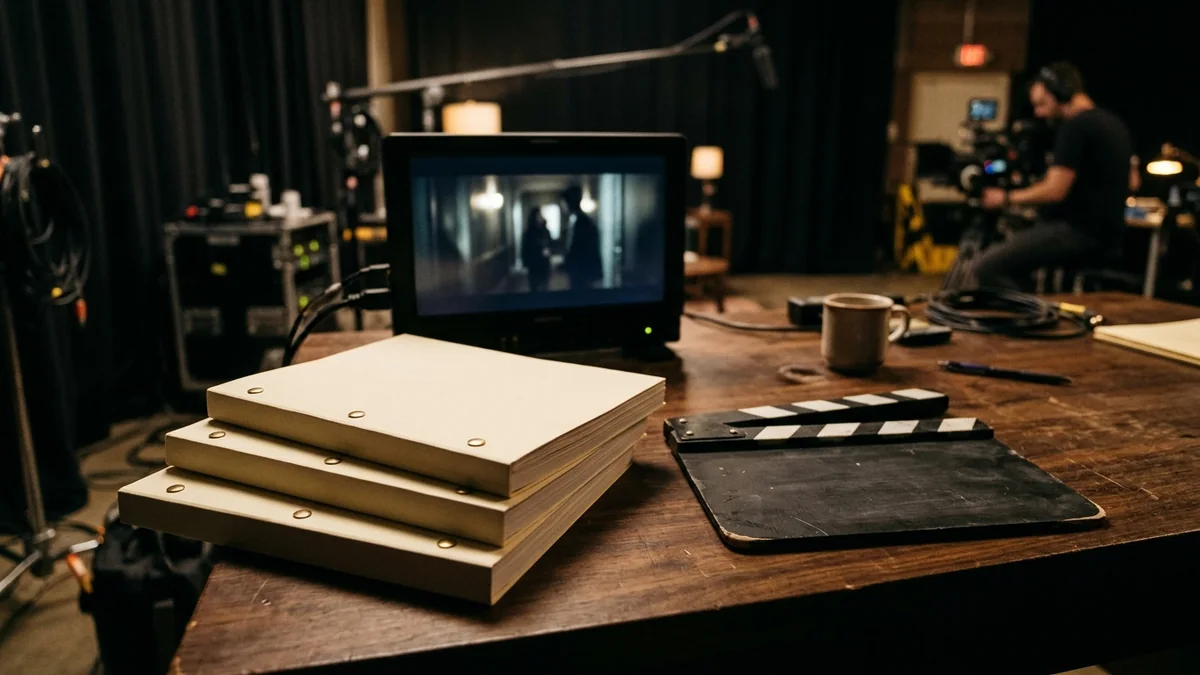
Understanding what is a tv pilot separates a single prototype episode from a full-season series commitment. A television pilot (or pilot episode) is a standalone episode of a television series used as a testing ground to sell a show to a television broadcaster or other distributor and determine whether an entertaining concept can be realized and whether the expense of additional episodes is justified; across the big four US networks, Variety estimated that roughly 100 pilots were reviewed by network executives each year, with only a little over a quarter proceeding to the series stage. In 2026, NBC placed pilot orders for eight new projects across five dramas and three comedies, generating 4,000 new jobs to produce pilot episodes and test the waters on cast and creative teams before committing to full seasons.
To see how greenlit pilots move onto the annual broadcast grid, pair this explainer with our guide to how fall TV schedules work, our breakdown of TV upfronts and fall schedule buys, and our TV Reviews section.
What a TV pilot tests across the pitch-to-series development funnel
During tv pilot season, broadcast studios narrow pitches into scripts, standalone prototype episodes, and upfront series pickups. NBC and Peacock Scripted Content President Lisa Katz described pilots as another step in development and a way to fine tune what can ultimately be the next hit. For decades under traditional pilot season, broadcast networks made a combined 40-50 pilots a year to test potential new scripted shows by producing a single episode, with a dozen shows coming out of those efforts each season. NBC series that began with pilots through a traditional pilot season before the network picked them up to air include Friends, Seinfeld, Cheers, Law & Order, ER, and 30 Rock.
Historical and modern broadcast funnels show how steeply projects are filtered before a network schedule announcement. In the lead-up to the 2010-11 broadcast season, each major US broadcast television network received about 500 brief elevator pitches, requested scripts for about 70 pitches, ordered about 20 pilot episodes in the spring, and chose about four to eight pilots for series status to present at the May upfronts (with typically only one or two surviving for more than one season). During the development cycle, NBC and Peacock’s scripted development teams looked at over 1,500 submitted pitches for new TV shows, developed roughly 70 projects specifically at NBC, and gave eight projects pilot orders, with greenlight decisions on most expected before NBCUniversal’s 2026-27 season upfront presentation in May.
The table below traces how NBC’s pilot slate moved from pilot orders to May upfront series pickups and seasonal scheduling windows.
| Development Stage | Documented NBC Slate & Creative Scope | Outcome & Scheduling Window |
|---|---|---|
| NBC Pilot Orders (2026) | Eight new projects ordered across five dramas and three comedies | Generates 4,000 new jobs to produce pilot episodes and test the waters on cast and creative teams before committing to full seasons |
| Pitch & Script Funnel (2026-27 Cycle) | Scripted development teams looked at over 1,500 submitted pitches for new TV shows and developed roughly 70 projects specifically at NBC | Eight projects received pilot orders, and greenlight decisions on most are expected before NBCUniversal’s 2026-27 season upfront presentation in May |
| NBC Drama Pilots | Rockford Files reboot from producer Mike Daniels starring David Boreanaz, What the Dead Know executive produced by Dick Wolf, and Protection created by Josh Safran and set to star Peter Krause | Puzzled from writer Joey Falco starring Damon Wayans Jr., and a profiler drama from Dean Georgaris inspired by Dr. Ann Burges and starring Emily Deschanel |
| NBC Comedy Pilots (2026-27 Season) | Workplace comedy set in an L.A. private detective’s office from Brooklyn Nine-Nine writers Dan Goor and Luke del Tredici which Katz said could complement St. Denis Medical (renewed for Season 3 for the 2026-27 season) | Two multicam comedy pilots to complement Happy’s Place: Newlyweds starring Téa Leoni and a buddy comedy starring Katey Sagal and Jane Lynch |
| Upfront Series Greenlights (May 11, 2026) | Dramas Line of Fire (starring Peter Krause and Hope Davis) and The Rockford Files (starring David Boreanaz), and comedies Newlyweds (starring Téa Leoni and Tim Daly) and Sunset P.I. (from the executive producers of Brooklyn Nine-Nine) | Four new scripted series unveiled on May 11, 2026 for NBC’s 2026-27 schedule |
| Fall vs. Midseason Placement | Line of Fire assigned to Monday nights in the fall (10-11 p.m. ET/PT) and Newlyweds assigned to Friday nights in the fall (8:30-9 p.m. ET/PT) | Greenlit drama The Rockford Files scheduled for January and greenlit comedy Sunset, P.I. scheduled for February |

Premise pilots, backdoor pilots, put pilots, and two-hour pilot movies
Television distributors use several distinct pilot formats depending on how a concept is tested and financed. Industry pilot classifications distinguish a premise pilot (which introduces the characters and world and is often reshot, recast, or rewritten if substantial changes are made before greenlighting, as with Gilligan’s Island where three roles were recast), a proof of concept pilot (usually set chronologically further into a series run to show a typical episode), a backdoor pilot (a telefilm or miniseries that serves as a proof of concept for a full series), a put pilot (which the network has agreed to broadcast or pay substantial monetary penalties to the studio), and an unsold or busted pilot (a produced episode never broadcast or made into a series).
A network may also reject an initial pilot while ordering a second prototype episode to retool the lead cast and pacing. On June 29, 1964, NBC approved Gene Roddenberry’s pilot script for Star Trek (‘The Cage’, starring Jeffrey Hunter as Captain Christopher Pike and Leonard Nimoy as Mr. Spock, filmed at Desilu Studios in late 1964 and completed in early 1965); although NBC rejected the initial pilot as too slow-paced and cerebral, the network ordered a second pilot featuring William Shatner as James T. Kirk, which succeeded and led to the series premiere on September 8, 1966 (running three seasons until 1969). On September 24, 2007, CBS aired the pilot episode of The Big Bang Theory (directed by James Burrows), which drew 9.5 million viewers in its debut and went on to run 279 episodes through its 2019 finale, garnering 10 Emmy Awards.
Feature-length pilot movies and extended-length premiere episodes follow specific broadcast and Emmy rules. On April 23, 1989, NBC aired the feature-length Baywatch pilot movie (‘Panic at Malibu Pier’) as a proof of concept before launching the full series on September 22, 1989 for a 21-episode inaugural season; after NBC canceled the show following its first year due to domestic ratings, lead actor David Hasselhoff revived it in syndication in 1991. Under the Television Academy’s Emmy Awards Rules and Procedures (Area 107), two-hour pilots or special extended-length episodes of a series may be submitted as a single episode if they originally aired in one continuous time block with a single main title card and a single end credit roll, whereas two-part or multi-episode events with separate main titles must be entered as part of a season entry.
How guild rules and Emmy credits separate the pilot from the ongoing series
Guild agreements and awards rules treat the pilot as a separate contractual unit from subsequent series episodes. In NBC’s credits for its newly greenlit scripted series, directors Rebecca Thomas (Line of Fire), Greg Mottola (The Rockford Files), Akiva Schaffer (Sunset P.I.), and Pam Fryman (Newlyweds) are each credited as executive producer for the pilot only. Under the Directors Guild of America’s Creative Rights Checklist for Episodic Television & High-Budget SVOD/AVOD Series, if a director directs the pilot of a series and a domestic DVD or Internet Web page is created, the pilot director’s name, background, and filmography must be included along with those of the series’ ‘creator’. Under the DGA Creative Rights Checklist, an episodic director must see the editor’s cut within four business days for a half-hour series or six business days for a one-hour series after shooting is complete, and must have two days (half-hour episode) or four days (one-hour episode) to complete the director’s cut before it is screened for the producer and the person with final cutting authority.
Writing and producing rules also separate initial pilot authorship from ongoing series management. In the Writers Guild of America West’s Pilot Deal Guide (Updated May 2025, analyzing approximately one thousand pilot deals made during the term of the 2023 MBA), key compensation terms in pilot deals include pilot script fees, episodic fees in the event the pilot is picked up to series, and series sale bonus compensation. Under the WGA Pilot Deal Guide, an ‘if/come’ agreement gives a company a limited right to obtain financing or generate network interest in a writer’s project without paying an option fee, but a company or producers acting on its behalf may not ask a writer to write literary material for potential buyers for free or for less than MBA minimum, even if told it is ‘just a pitch.’ WGA Working Rule 3 requires writers to provide the Guild with a copy of all employment, option, and purchase contracts no later than one week after receipt of the contract. Under Section II.E.7 of the WGA Television Credits Manual, for Separation of Rights arbitrations (which determine ‘Created by’ credit and separated rights), the Guild maintains two separate lists of arbitrators—one of experienced arbitrators who have written comedy pilots and one of those who have written dramatic pilots—with a Television Credits Committee member experienced in writing pilots serving as consultant to the arbitration panel.
Once a series order is issued, ongoing leadership and casting eligibility follow series-level credit rules. In the Producers Guild of America’s Code of Credits for Producing Episodic Television (Scripted), the Executive Producer credit applies to primary creative contributors including the Showrunner (or Co-Showrunner) with overall creative authority and management responsibility for the entire scripted series, a producer in a creative producing role from ideation and pitch through all phases of production and/or responsible for packaging and selling the series to the network or studio, or a person responsible for the creation of the series (concept, format, and characters), while the Line Producer (or ‘Produced By’) has primary responsibility for the budget and logistics from pre-production through delivery of each episode. Under the Television Academy’s Emmy Awards Casting Awards rules, the pilot, series, and location casting offices are considered separate offices, and in Seasons 2 and 3 the ‘Original Casting By’ team is eligible in Drama/Comedy Series Casting categories if they continue to receive an ‘Original Casting By’ credit in the eligible season and 50% of the original cast remains in the series. Under Rule 11a and Rule 11c of the Television Academy’s Emmy Awards Rules and Procedures, six episodes from a series in animation, comedy, drama, variety, short form, or reality categories must premiere nationally by May 31 to qualify in the current Emmy competition, whereas an ongoing or intended series (excluding documentary/nonfiction) that is cancelled or discontinued and/or has five or less episodes first aired in the current eligibility year is ineligible for program category entry. For a deeper look at series-wide producing authority, read what a showrunner decides.

Traditional TV pilot season versus straight-to-series pickups and short-order span rules
Industry shifts toward streaming and rolling broadcast development have changed how studios contract writers and cast members. Streaming platforms favored straight-to-series orders, which allow a show to develop its first season in full upon receiving a green light and put pilot production on the back burner, while production pauses due to Covid and the writers’ and actors’ strikes also made pilot production difficult. According to Spotlight’s analysis of US pilot season, when a show is commissioned straight to series, it guarantees an actor’s role for the whole season, whereas in traditional pilot season actors had to wait for a pilot to be picked up before being offered a role for the rest of the series (as with Friends in 1994, Cheers, which aired for 11 seasons and received 27 Emmy Awards from over 117 nominations, Lost, The Big Bang Theory, and The Office).
Broadcast networks also combine upfront series pickups with year-round rolling pilot development. On May 12, 2025, when NBC unveiled its 2025 fall schedule and greenlit the comedy series The Fall and Rise of Reggie Dinkins (starring Tracy Morgan and Daniel Radcliffe), the network stated that as part of NBC’s rolling development cycle and 52-week scheduling strategy, the comedy pilots Stumble (from Jeff and Liz Astrof) and an untitled project from Sierra Teller Ornelas could air in the 2025-26 season if picked up to series.
When a network or streaming service orders a shorter season rather than a traditional broadcast run, guild contracts regulate episodic fees, work span, and writer option holds. According to the WGA Pilot Deal Guide, pilot producing fees were historically paid at a premium relative to episodic fees, though many deals now contain a single rate for all episodes inclusive of the pilot as the industry has moved away from a pilot production process towards ordering an entire season. The WGA Pilot Deal Guide advises writers making a pilot deal without knowing what network or service might eventually produce the series to consider negotiating higher episodic fees to account for a potentially shorter episode order.
The table below summarizes the WGA Minimum Basic Agreement thresholds governing short-order span protection and writer options.
| Contract Provision | Covered Episode / Employment Threshold | Key Guild Rule & Protection |
|---|---|---|
| WGA MBA Span Provision (In effect since 2017, Updated May 2025) | Broadcast series with a full season order of 12 or fewer episodes, or basic cable, pay TV, high budget SVOD (HBSVOD), or high budget AVOD (HBAVOD) series with a full season order of 14 or fewer episodes | Covers Article 14 writer-producers (co-producer level and higher) paid an episodic fee |
| WGA MBA Work Span Cap & Limited Series Eligibility | 2.4 weeks of work per episode (for example, 24 weeks for a 10-episode order), with contracts entered into on or after December 1, 2023 also covering multi-part, closed end series (limited series) | Additional compensation is owed if a covered writer-producer works longer than 2.4 weeks multiplied by the number of episodes |
| WGA MBA Options & Exclusivity Threshold (In effect since 2014, Updated August 2026) | Episodic series or serial with fewer than 22 episodes or less than 40 weeks of employment | Covers eligible Article 13 staff writers and Article 14 writer-producers |
| WGA MBA Unpaid Hold & Mini-Room Rules | 60 days maximum unpaid first-position hold from the date the last payment for initial employment is due, and short employment (‘mini-rooms’) of eight weeks or less | After 60 days, the company must pay at least 1/3rd of the weekly minimum to continue holding the writer in first position (or the writer may seek other work), may not require exclusivity after the last payment in the contract year becomes due, and may not negotiate an option on an eight-week or shorter mini-room for covered writers earning less than $280,500 unless the option employment begins immediately following the initial short employment |
Series orders, back-nine pickups, and midseason TV replacement scheduling
Receiving a series order at the May upfronts does not mean every episode of a traditional broadcast season is funded at once or scheduled for September premiere week. On a North American broadcast network, a traditional full season runs from September through May for at least 22 episodes; since at least the 2000s, new broadcast series are often funded initially for the first 10 to 13 episodes to gauge audience interest, receiving a ‘back nine order’ to complete the season to 20 to 26 episodes if popular, or being replaced by a midseason replacement of generally 10 to 13 episodes if the original series fails to garner an audience and is not picked up. According to Nielsen’s September 2, 2025 announcement, its Big Data + Panel national TV measurement (widely adopted as currency for the 2025 Upfront and starting weekly rankings with the official beginning of the Broadcast season on September 22) combines data from cable, satellite set-top boxes, and smart TVs across 45 million households and 75 million devices with a representative persons panel of more than 42,000 homes and 100,000 people across the U.S., and helps inform content programming and licensing decisions in addition to advertising planning and buying.
A midseason tv replacement can either step into a vacated fall time slot or launch in a planned winter or spring window. In American network television scheduling, a mid-season replacement is a television show that premieres in the second half of the traditional television season, usually between December and May, either after a show in the fall schedule was canceled or put on hiatus, after outside factors led to a delay, or because a program was deliberately scheduled for mid-season (such as shows NBC airs on Sunday nights after the NFL season ends or American Idol airing from January to May), whereas a summer replacement debuts between May and August when a network’s fall schedule is on hiatus.
Across the broadcast calendar, NBC, FOX, and CBS each split their greenlit series between fall premiere windows and midseason debuts:
- NBC Fall vs. Midseason Split: On June 24, 2026, NBC set its 2026-27 fall premiere dates: after airing the Primetime Emmy Awards on Monday, Sept. 14 and launching The Traitors: New Blood on Thursday, Sept. 17 at 8 p.m., NBC scheduled Newlyweds to premiere Friday, Oct. 23 at 8:30 p.m. following Happy’s Place at 8 p.m., while confirming that greenlit series The Rockford Files and Sunset P.I. will launch in January and February, respectively.
- FOX Fall vs. Midseason Split: On Monday, July 13, 2026, FOX announced its Fall 2026 premiere dates (beginning Monday, Sept. 21 through Sunday, Sept. 27) while holding new dramas Baywatch and The Interrogator and new unscripted series Marriage Market to debut midseason.
- CBS Fall vs. Second-Half Split: On July 27, 2026 (07/27/2026), CBS announced its 2026-2027 fall primetime premiere dates with official ‘CBS PREMIERE WEEK’ kicking off on Sunday, Oct. 4 (including series premieres NCIS: New York on Tuesday, Oct. 6 and Eternally Yours and Cupertino on Thursday, Oct. 8), while planning returning series Matlock, Ghosts, and NCIS: Sydney and new series Einstein for the second half of the 2026-2027 broadcast season.

Landmark broadcast comedy and drama hits have also launched as midseason replacements after their pilots rather than during autumn premiere week. Created by Jerry Seinfeld and Larry David, Seinfeld first arrived on NBC on July 5, 1989 as a midseason replacement following a pilot that tested the boundaries of sitcom formulas, struggling in its early seasons before running 180 episodes across nine seasons and drawing an estimated 76 million viewers for its May 14, 1998 finale. Created by Shonda Rhimes, Grey’s Anatomy premiered its pilot episode (‘A Hard Day’s Night’) on ABC on March 27, 2005 at 10 p.m. ET as an American midseason replacement series, drawing 16.2 million viewers and a 12.8 Nielsen rating before running 463 episodes across 22 seasons and earning 39 Emmy nominations with four wins.
To compare how each broadcast network staggers its autumn premiere dates and midseason holds, see our guide to fall TV schedule network rollout windows and browse the Denver TV Guy blog archive.
Sources
- NBCUniversal — Scripted Content Development and Pilot Season Press Releases
- NBCUniversal — Upfront Series Greenlights and Fall Premiere Date Announcements
- FOX / FOXFLASH — Fall Premiere Date and Midseason Schedule Announcements
- CBS / Paramount Press Express — Fall Primetime Premiere Date Announcements
- Writers Guild of America West — Pilot Deal Guide
- Writers Guild of America West — Span Guide: Protecting Overscale Pay for TV Writer-Producers
- Writers Guild of America West — Options & Exclusivity: The Ability to Find Work
- Writers Guild of America — Television Credits Manual
- Directors Guild of America — Creative Rights Checklist: Episodic Television & High-Budget SVOD/AVOD Series
- Producers Guild of America — Producing Credits for Episodic Television (Scripted)
- Television Academy — Primetime Emmy Awards Rules and Procedures
- Nielsen — National TV Audience Measurement and Big Data + Panel Press Releases
- Spotlight — US Television Pilot Season and Casting Analysis
- Cord Cutters News — Broadcast Television Pilot and Midseason Replacement Archives
- Wikipedia — Television pilot, Mid-season replacement, and Television show